Prev Article
When digital feels slippery, print gains weight
Insight
27 . 05 . 26

How print turns attention into memory

Words by: Ulbe Jelluma
Attention is easy to count and hard to keep. In a digital culture built for speed, even useful messages can disappear before they have had time to settle. Print works differently. By giving information a physical form, a place and a rhythm of its own, it helps selected messages move from passing attention into memory.
PieterPost_Print-Power.png

At a glance

  • Gen Z values print when it is useful, personal and worth keeping.
  • Physical media helps messages gain presence, place and memory.
  • Print creates what digital often lacks: a beginning, an end and somewhere to live.
  • The strongest print does not chase digital speed; it creates its own rythm.

A postcard, of all things

The newest idea in messaging may turn out to be the postcard. That is not nostalgia speaking. It is a reminder that progress rarely travels in a straight line.

In the Netherlands, PieterPost introduced a WhatsApp postcard service. Users send a photo and text via WhatsApp; PieterPost prints and delivers it as a physical postcard. There is no app to download, no stamp and no trip to the postbox. It is simply a digital message that has acquired paper, ink and a physical life of its own.

A WhatsApp message is quick but instantly buried. A postcard is slower, less efficient and harder to ignore. It sits on a mantelpiece, leans against a kettle or is kept in a drawer as modest evidence that someone thought of us.

Digital natives, physical instincts

For millennials and Gen Z, physical objects are not a retreat from digital life. They have lived with screens long enough to understand both their strengths and their limits. What is emerging is not anti-digital behaviour, but selective physicality: the decision that some things deserve to become tangible.

Digital culture is abundant and restless. Media is available in extraordinary quantities, but often without a strong sense of possession. A song is accessed, not owned. A film is available until a licence changes. A photograph is buried in a camera roll of several thousand images, rarely receiving a second look.

The cloud is useful, but it is not a memory box.

Objects work differently. They have weight, texture and location. They interrupt rather than join the scroll. They can be found accidentally, displayed, reordered, passed around and kept. They give information edges.

That matters because memory is not built by exposure alone. It is built through attention, emotion, repetition and context. Marketreach’s neuroscience work has shown that physical mail can generate stronger memory encoding than comparable digital messages. The broad point is not mysterious. When a message has a place in the world, it has more chances to be noticed, revisited and remembered.

Arts_University_bournemouth_print-Power.jpg
Arts-University_Bournemouth2_Print-Power.jpg (1)

A prospectus you can build yourself

Arts University Bournemouth’s new prospectus is a useful example of this principle. For its 2027/28 intake, AUB moved away from the traditional bound prospectus and created a modular, card-based system. Prospective students can pick and mix course, campus and creative identity cards, building a set of information that reflects their own interests.

The communication effect is stronger than the format first suggests. A conventional prospectus presents the institution’s structure. A card-based prospectus begins with the student’s choices. It allows young people to select what is relevant, arrange it, handle it and keep it.

That changes the role of print. The prospectus is no longer merely a container for information. It becomes a tool for discovery.

AUB’s archetype cards invite students to think about themselves as creative people: makers, strategists, world builders, performers, storytellers. The point is not just which course to choose, but how a young person sees their creative future taking shape.

That is where print can do something useful. It makes the abstract visible. It allows information to be compared physically, spread out on a table, discussed with friends, shown to parents or taken into a careers conversation.

It also echoes a wider creative trend: Netflix’s ‘Discover Your Future’ campaign used a boxed set of 50 bespoke tarot-style cards for influencers, turning abstract choice into a tactile, shareable object.

For Gen Z, this is not print as old media. It is print as interface: flexible, selective, personal and social. The AUB example avoids a common mistake. It does not assume that physical media will be valued simply because it is physical. The cards have a job to do. They help students navigate complexity and create a sense of ownership over the information.

Good print is not paper plus ink. It is a designed encounter.

Netflix_Discover-Your-Future_Print-Power.jpeg
Netflix_Discover-Your-Future-Cards_Print-Power.jpg

Slow print for fast times

The same principle applies beyond Gen Z, and beyond objects designed to be handled or rearranged. Tangibility is not only a matter of touch. Print can also make information more memorable by changing its rhythm.

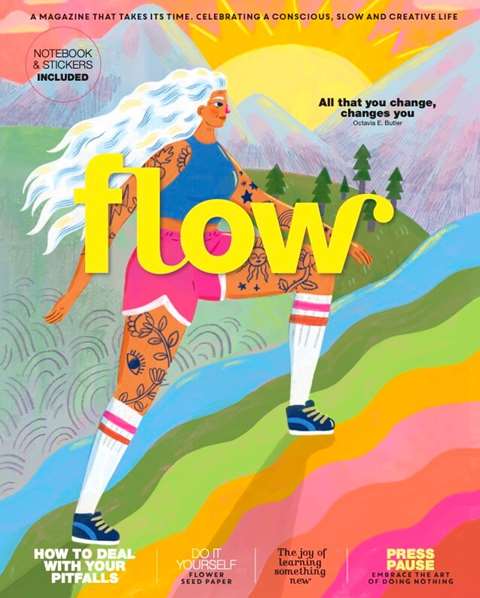
The West End Phoenix, a monthly community newspaper in Toronto, describes itself as “slow print for fast times”. It was launched as a print-first paper, resisting the assumption that every publication must chase the internet’s tempo.

Its appeal lies in being local, finite and designed to be held. A printed newspaper feels less like old technology and more like edited attention. It says: this has been chosen, arranged and given a place.

That is not a youth trend. It is a human response to overload.

This is an editorial example rather than an advertising case study. The relevance for marketers is that they show how print changes the conditions of attention. It asks the reader to enter a bounded experience, rather than adding another fragment to the feed.

For marketers and publishers, the lesson is not that print is useful because it is slow, or because it is physical. It is useful when those qualities create structured attention. AUB’s cards do this by making choice visible and personal. West End Phoenix does it by resisting the feed and giving information a more deliberate rhythm.

In a digital environment, more information does not always mean more meaning. Print can create boundaries: a beginning, an end, a sequence, a place. That is why it can work as a memory device. It gives a message somewhere to live.

West-End-Phoenix_Cover_print-Power.png

Print as a physical interface

Print belongs naturally in this territory, but it should not merely boast that it survived the internet. The stronger argument is that print offers something highly relevant to digital culture: it gives selected moments a physical form.

That is also the logic behind personalised direct mail, welcome packs, catalogues, membership materials and brand objects that arrive at the right moment. When well designed and properly timed, print does what an email cannot. It arrives somewhere, occupies space and becomes visible in someone’s life.

For printers, this moves the conversation from output to experience design. Variable data, short runs and automation are not just production capabilities; they are commercial tools. They allow printers to help brands create timely, personal and measurable physical touchpoints: a prospectus assembled around a student’s choices, a loyalty mailing triggered by behaviour, a catalogue versioned by customer interest, or a welcome pack that turns onboarding into something tangible.

That gives printers a stronger role in the marketing discussion. They are not only supplying paper, ink and finishing. They are helping decide which moments deserve substance, how those moments should feel, and how print can make them easier to notice, keep and remember.

For marketers, the point is not to add paper to a campaign. It is to decide which moments deserve edges.